- Dedicated subject experts (domain-wise).
- Zero-AI score promise (manual writing).
- 100% plagiarism-free + originality checks.
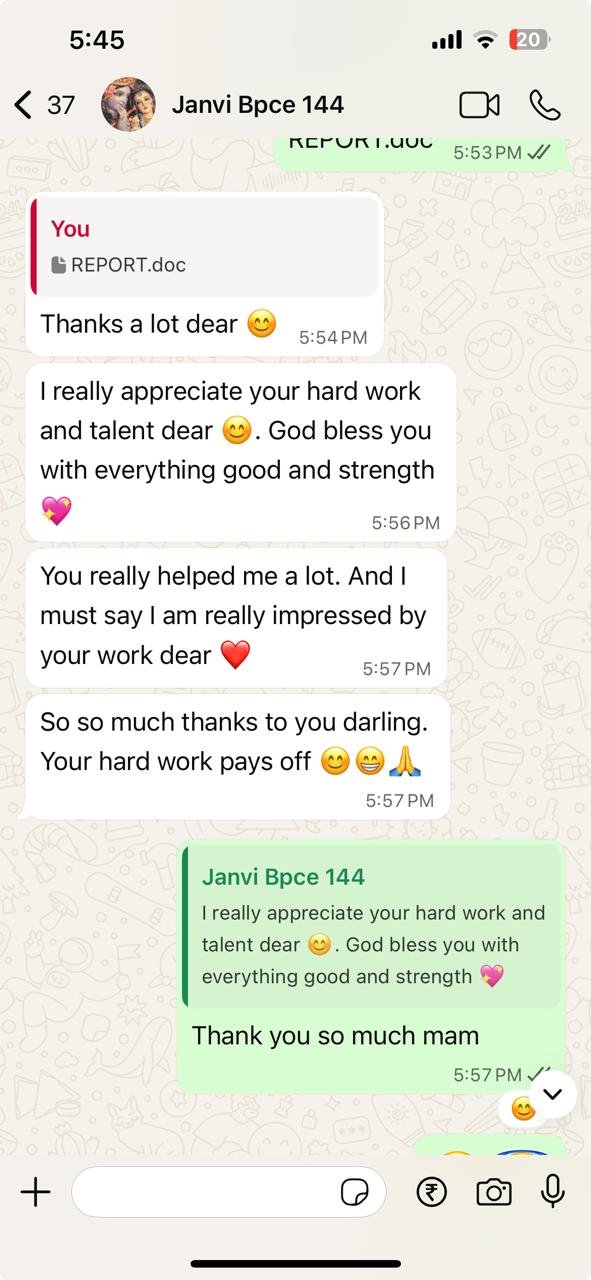
- 1-to-1 WhatsApp support till delivery.
- Transparent process with clear updates.
IGNOU Project Writing Help – Expert Guided & Approval Focused
Get course-specific IGNOU synopsis,IGNOU project report, dissertation, and viva-PPT prepared as per latest university guidelines. Each project is written from scratch, checked for format accuracy, and supported till submission.
Why Choose IGNOU Galaxy?
IGNOU Project & IGNOU Synopsis Service by Galaxy is built for approval, accuracy, and smooth submission.
What is the IGNOU Project Report Structure?
Below are the major sections of an IGNOU project. This is a sample outline — your structure may vary slightly as per course guidelines.
How Your IGNOU Projects Will Be Provided After You Place the Order
A simple process designed for approval, clarity, and on-time delivery.
Step 1: Expert Consultation Call
After order, our subject expert calls you to understand course code, guidelines, and deadlines.
Step 2: WhatsApp Group Creation
A dedicated group is created for updates. You can suggest a topic or we recommend the best one.
Step 3: Synopsis Preparation
We prepare a custom synopsis within 3–6 days and assist with guide approval + viva questions.
Step 4: Final Project / Dissertation
After synopsis approval, final report is completed within 15–20 days (as per scope).
Step 5: End-to-End Support
We stay with you through submission, approval, and marks update via the WhatsApp group.
Fill the form to place your order
Select your project, set medium & payment option, then continue to secure checkout.
Have any confusion or doubts while ordering?
📞 Call our expertTalk to our Expert
Get quick guidance on topic, synopsis, format & approval process — call or WhatsApp now.
Why IGNOU GALAXY Wins Over Others?
A quick side-by-side comparison in one glance.
- No dedicated experts (generic writers).
- AI / copied content risk → rejection chances.
- Weak originality checks + quality control.
- No 1-to-1 support after payment.
- Unregistered individuals (low accountability).
IGNOU Project Services Reviews – What Students Say About IGNOU Galaxy
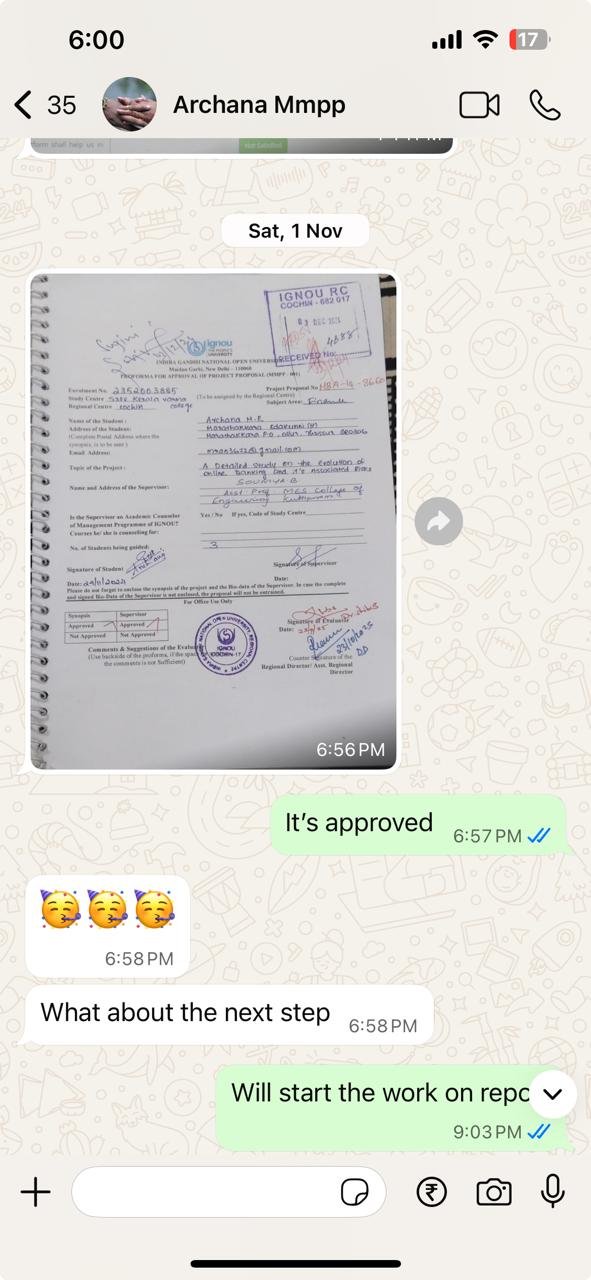
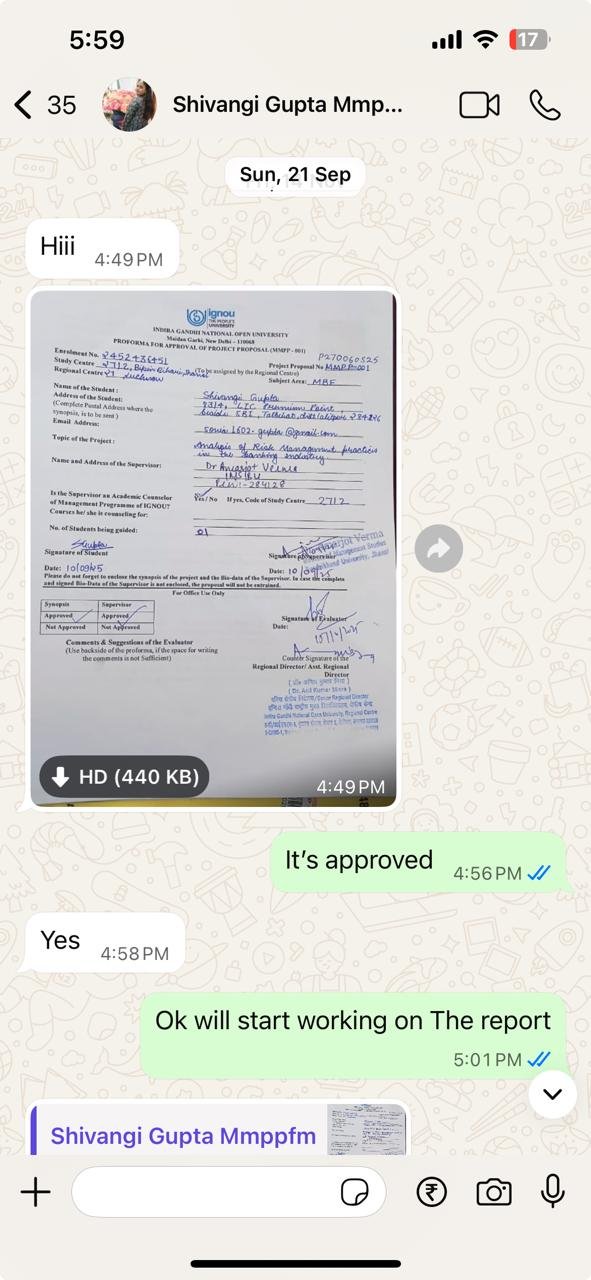
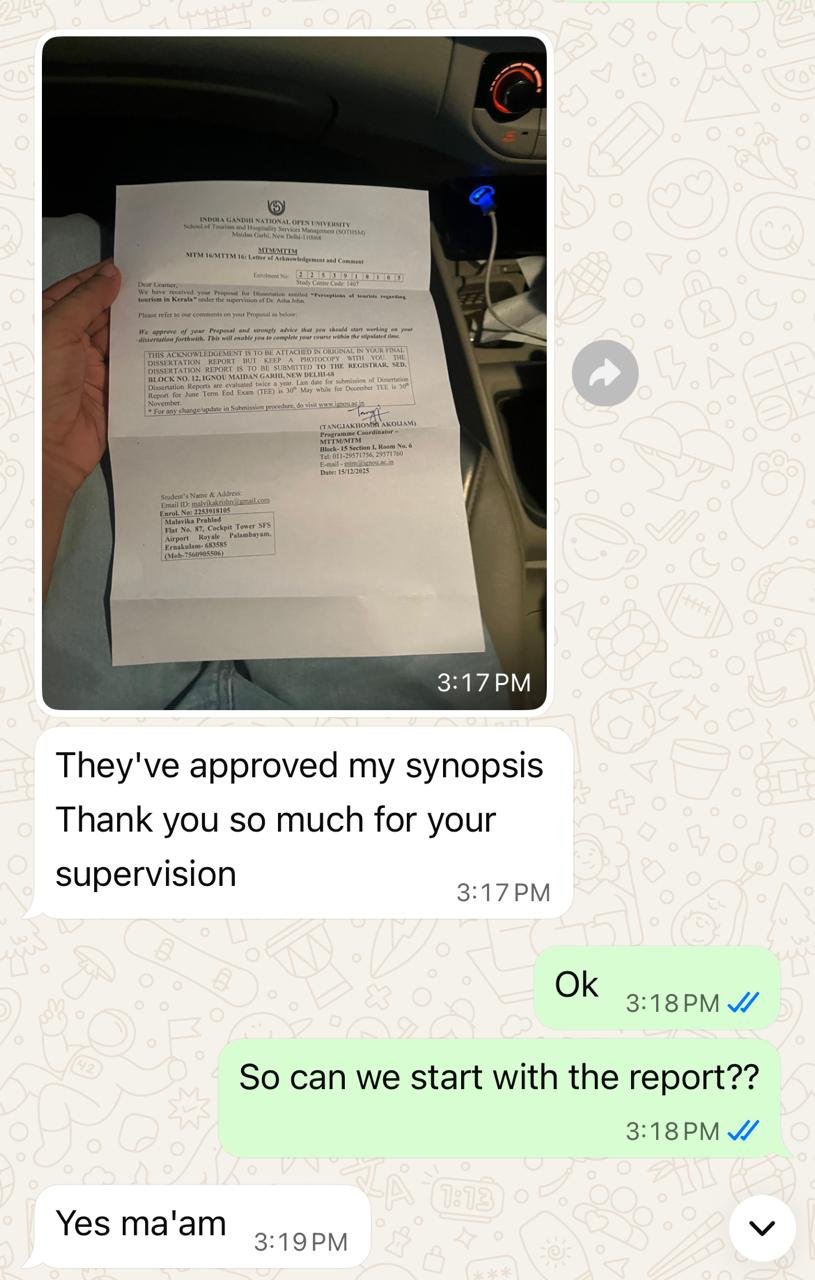
Real feedback from students who used our IGNOU project guidance services.
.Give a Review !!
IGNOU Project FAQs (Topic → Synopsis → Approval → Report → Viva)
Your complete roadmap to a 100% approved IGNOU Project. Simple answers for topic, synopsis, report, and viva — all in one place.
Pick a topic for your IGNOU Project that is clearly connected to your programme, has a defined scope, and produces a visible output (analysis, case study, system, field report, intervention plan, etc.). Approval becomes smoother when your synopsis shows what you will do, how you will do it, and what you will submit at the end.
Best pattern: “A Study on X at Y (Location/Year)” or “Design & Evaluation of X for Y”.
Yes — and it is often the smartest choice. Real workplace topics feel natural, make data collection easy, and help in viva. Just ensure your IGNOU project is academic (clear objectives + method) and not only storytelling.
Not always. Some projects work well with secondary data (reports, official datasets, published studies), while others look stronger with primary data (survey/interview/observation). If you are unsure, include a small primary component — even 20–40 responses can make a project look genuine.
A similar domain is fine, but your project should be unique in content. Change organisation/area/year/variables, and do your own data and analysis. Copy-style similarity is the easiest way to invite rejection or low marks.
Keep it simple but specific. A good title tells the evaluator topic + context + scope. Avoid fancy words if the work inside is simple. The title should match your objectives and methodology exactly.
If your IGNOU Project title is too broad, your synopsis becomes weak and approval becomes slower.
Yes, if your programme accepts desk-based projects. You can do data-driven analysis, online surveys, telephonic interviews, documented case studies, or system-based projects (like software documentation). The key is that your method should look practical and verifiable.
Our experts follow the latest IGNOU Academic Guidelines for your specific programme (MBA, MAPC, MSW, etc.). We provide unique topics, measurable objectives, and a professional methodology that evaluators look for. With our 100% Approval Ratio, if any minor correction is suggested by the faculty, we provide the revised work at no extra cost.
We provide End-to-End One-on-One Guidance. Once you choose GALAXY, we handle the heavy lifting—from selecting a research-worthy topic to preparing a ready-to-submit Synopsis and a high-quality Final Project Report. You simply follow our step-by-step instructions for submission and prepare for your Viva using our expert-curated notes.
Unlike generic providers, GALAXY offers Plagiarism-Free, customized work tailored to your specific enrollment. We do not sell old, copied files. Every synopsis and report is prepared by Highly Professional Experts in your subject area. Plus, we provide the mandatory certificates and guide details required to make your project report 100% valid for evaluation.
Think of an IGNOU synopsis as an “IGNOU project plan”. It usually contains: title, background, problem statement, objectives, scope, methodology (data + tools), sample details (if survey), expected outcome, chapter plan, timeline, references, and guide/student details as required.
An IGNOU synopsis fails mostly due to missing structure — not because the topic is bad.
Your IGNOU Project guide is the official academic mentor who validates your work. A guide’s details (biodata, signature, consent) must match across synopsis and report. A mismatch creates unnecessary objections during evaluation.
Writing objectives that are too general (for example: “to study the project”) and a method that does not match those objectives. Your objective should be measurable, and your method should clearly explain how you will reach it.
You can use a local institution, small business, NGO, school, clinic, online community, or a defined population group. Even a simple setting works if your data collection plan is realistic and ethical.
Yes — but do not change it randomly. Minor changes (title refinement, sample size, tool) are usually okay if the core stays the same. Major changes (different domain) generally require fresh synopsis submission.
Yes. Even 6–10 relevant references make the synopsis look serious and academic. Use a consistent style (APA/MLA/Harvard) and cite genuine sources.
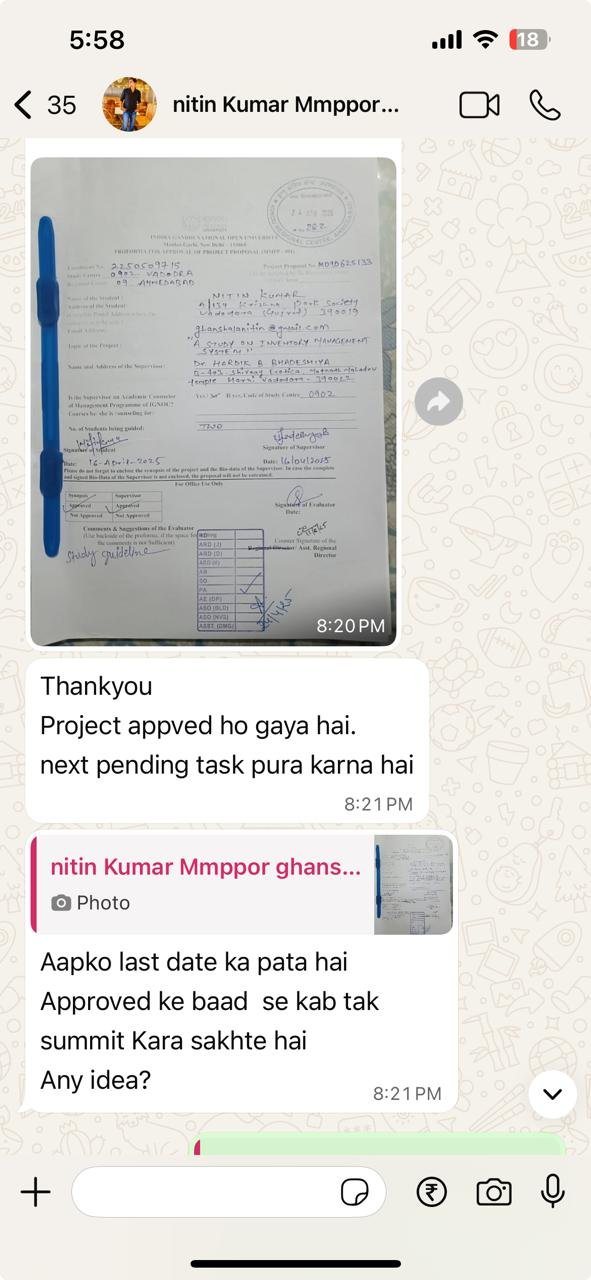
Approval timelines differ by programme and regional centre. In practice, it can take from a few weeks to longer depending on submission slot load. Always keep your submission proof safe and track updates as per your RC process.
You can do background research, tool design, questionnaire preparation, and literature review — but do not finalize your report until you know the approved scope. If approval comes with changes, you may need to adjust objectives and methodology.
Smart way: prepare 60% work (literature review + tool) while waiting, and finalize after approval.
The title (or approved title), objectives, methodology, study area/sample logic, and guide details should match. If you changed major parts, your report may look off-scope and trigger objections.
Depending on programme rules, you may submit in the next slot. In some cases, approval validity may not carry indefinitely. So it is always better to submit within the allowed timeframe.
Genuine IGNOU projects have realistic context, clean structure, real data, appropriate analysis, and practical conclusions. When your findings connect clearly to your objectives, it becomes easy to defend in viva.
Reality check: if your report looks like a textbook chapter, marks usually suffer.
Most reports follow: Introduction, Literature Review, Methodology, Data Analysis/Findings, Discussion, Conclusion & Suggestions, Limitations, References, and Annexures (tools, questionnaires, tables).
Keep your objectives realistic, use clear tables/graphs, explain insights in simple words, and connect each finding to an objective. Even small samples look strong when interpretation is honest and structured.
Many programmes require certificates/signatures. Add them exactly as per the format required in your handbook. Missing certificates is one of the easiest ways projects get returned for correction.
Minor wording changes are okay, but changing meaning or scope is risky. Best practice: keep the title exactly the same as the approval, and refine the subtitle inside the report if needed.
Avoid copied paragraphs, random references you did not read, fake tables that do not match charts, and perfect data that looks unrealistic. Honest work with clean presentation always beats flashy but doubtful content.
Usually: why you chose the topic, objectives, what you actually did, methodology, sample/data, key findings, limitations, and how you would improve the project. If it is a technical/system project, they may ask about flow, modules, testing, and outcomes.
Read your own report properly and prepare a 90-second explanation: Topic → Objectives → Method → What you did → Findings → Conclusion. Mark 8–10 key pages (tables/graphs/tool/summary) so you can answer quickly.
Viva becomes easy when you can explain your project like a simple story.
Not if your explanation is clear. Speak slowly, use simple lines, and show your tables/graphs while explaining. Clarity matters more than fancy vocabulary.
Many programmes consider both. Your report quality gives you base marks, and viva checks whether you understand your own work. So even a good report needs basic preparation.
First, read the remarks calmly. Most rejections happen due to format issues, unclear objectives, or mismatch in method. Fix the exact points and resubmit with a cleaner structure. Do not keep the same mistakes and just change a few words.
A well-corrected synopsis is usually approved faster in the next attempt.
Common reasons: topic not aligned with the programme, vague objectives, unrealistic methodology, missing guide/student details, missing signatures, incomplete proforma, or an over-broad topic with no clear scope.
Not necessarily. Many returns are compliance pending — missing certificate, missing annexure, wrong format, wrong binding, mismatched title, missing guide signature, or incomplete documentation. Fix it and resubmit as per instructions.
Yes, if the correction points are specific (format, certificates, annexure, chapter order, minor method clarity). If the evaluator says off-scope or method invalid, then you may need larger changes.
Reduce scope smartly: keep objectives limited, use a smaller sample size, and ensure clean analysis and honest limitations. A smaller but well-presented project is safer than a large but incomplete one.
In many cases, yes — it can mean starting the process again with a fresh topic/synopsis as per programme rules. The exact process depends on your course guidelines, so always follow your handbook.